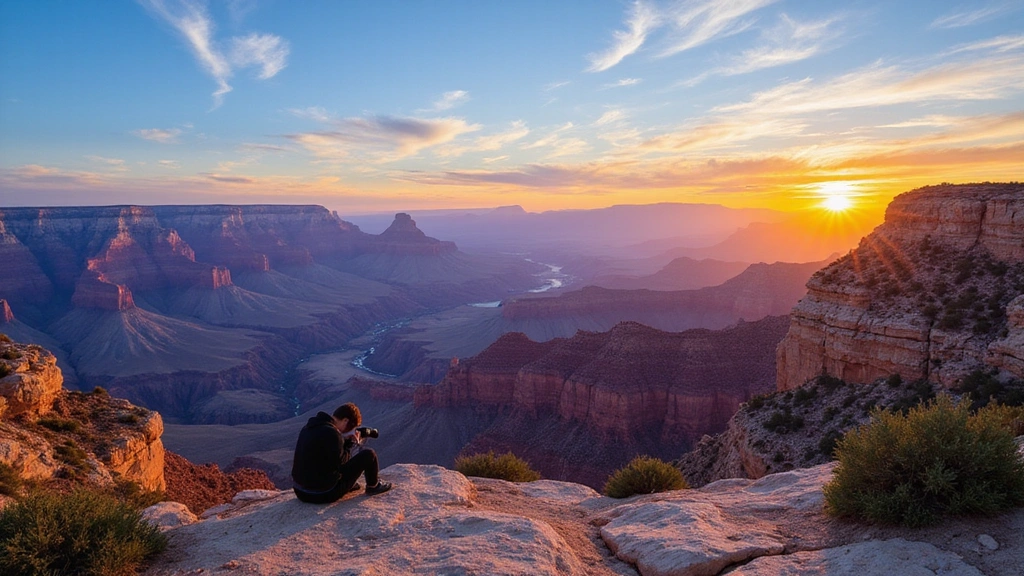

The Grand Canyon, with its breathtaking vistas and sweeping geological formations, serves as a dream canvas for any photographer.
From the rich, red hues of the rocks to the cerulean skies, each frame tells a unique story waiting to be captured.
Whether you’re a seasoned pro or just starting, photographing this natural wonder is an exhilarating experience that connects you with the great outdoors.
With countless perspectives and moods to explore, this guide will help you uncover the secrets of Grand Canyon photography, giving you the tools to create stunning images that reflect the canyon’s majestic beauty.
Contents
- 1. The Magic of Golden Hour
- 2. Exploring Different Angles and Perspectives
- 3. Utilizing Natural Elements
- 4. The Importance of Gear: What to Bring
- 5. Mastering Composition Techniques
- 6. The Power of Post-Processing
- 7. Choosing the Right Time of Year
- 8. Engaging with Local Experts
- 9. Safety First: Precautions to Keep in Mind
- 10. Inspiration from Iconic Photographers
- 11. Sharing Your Work with the World
- 12. The Role of Community and Networking
- 13. Documenting Your Journey
- 14. Embracing Failure and Learning
- 15. The Joy of Photography: Connect with Nature
1. The Magic of Golden Hour

Golden hour, the short period shortly after sunrise or before sunset, transforms the Grand Canyon into a magical wonderland.
The soft, warm light enhances the vibrant colors of the canyon walls, creating shadows that add depth and texture to your photos.
To capture this breathtaking beauty, aim to arrive at your chosen lookout point at least 30 minutes before sunrise or sunset. Scout the area beforehand to find the perfect spot that offers a clear view of the horizon.
Make sure to bring your tripod, as long exposure shots can help you capture the delicate dance of light and shadow across the landscape. Experiment with different compositions, like framing the canyon’s edges with trees or foreground rocks to create a sense of depth.
The golden hour is also ideal for capturing wildlife, as animals are often more active during these times, providing opportunities for stunning nature shots.
Consider using filters to enhance color saturation, especially if you’re photographing during the sunrise or sunset when the colors are most vivid.
Finally, don’t forget to enjoy the moment; sometimes, the best photos come when you’re not looking through the lens.
Product Recommendations:
• Landscape Photography Guidebook
2. Exploring Different Angles and Perspectives

Capturing the Grand Canyon is all about perspective. The sheer size of this natural wonder means that you can approach it from various angles to tell different stories.
Head to the South Rim, where popular spots like Mather Point and Yavapai Point offer breathtaking views. But don’t be afraid to venture off the beaten path.
Look for hidden vantage points or lesser-known trails; places like Desert View Watchtower provide a unique angle that many photographers miss.
Consider using a drone for aerial shots that showcase the sweeping curves and layers of the canyon. This adds a whole new element to your collection, allowing you to capture the vastness of the landscape in all its glory.
Change your focal length for more dramatic effects; a wide-angle lens can emphasize the canyon’s depth, while a telephoto lens can help isolate specific features, like a rock formation or a waterfall.
Experiment with both high and low angles. Shooting from a lower perspective can make the formations look even more towering and impressive, while elevated shots can give it a grand overview.
Sometimes, the simplest changes in angle can lead to extraordinary results. Don’t hesitate to crouch down or find a higher point; your creativity is your only limit!
Product Recommendations:
• Wide-angle lens for DSLR cameras
• Drone with 4K camera for aerial photography
• Tripod for stability during landscape shots
3. Utilizing Natural Elements

In landscape photography, natural elements can greatly enhance the story your image conveys. The Grand Canyon is rich with these elements—think foreground rocks, unique plant life, and the ever-changing clouds above.
Incorporating these features can add depth to your images and guide the viewer’s eye through the composition. Look for interesting foregrounds that can anchor your photo, such as vibrant desert flowers, striking rock formations, or even a winding path that leads into the canyon.
The play of light and shadow across these elements can create dynamic compositions, as the natural features cast interesting shapes on the ground, offering more context to the scene.
Don’t overlook the sky—dramatic cloud formations or even a storm rolling in can add an exciting atmosphere to your images.
And let’s not forget about the unique wildlife that calls the Grand Canyon home. Whether it’s the soaring eagles overhead or the wildflowers in bloom, these elements can create a more immersive experience for your viewers.
Utilize leading lines formed by trails or ridges to draw attention to the main subject of your photograph.
Remember, it’s all about telling a story—every natural element you include adds to that narrative, making your photos not just beautiful, but also meaningful.
Product Recommendations:
• Tripod for Landscape Photography
• Polarizing Filter for DSLR Cameras
• Photography Backpack for Outdoor Adventures
4. The Importance of Gear: What to Bring

Having the right photography gear can make a significant difference in capturing the Grand Canyon’s beauty. While great shots can be taken with a smartphone, a DSLR or mirrorless camera gives you more control and options.
A sturdy tripod is essential for stability, particularly during low-light conditions like golden hour or when capturing long exposures of the canyon’s features, such as waterfalls or rushing rivers.
Lenses play a crucial role too; a wide-angle lens is your best friend for capturing the expansive landscapes, whereas a telephoto lens can help you zoom in on intricate details like rock textures or distant wildlife.
Consider bringing a polarizing filter to reduce glare and enhance colors—especially the blues of the sky and the reds of the rocks.
Don’t forget extra batteries and memory cards! The last thing you want is to run out of space or power while you’re creating your masterpiece.
A lens cleaning kit will come in handy, particularly in dusty conditions often found in the canyon.
Lastly, pack a sturdy backpack to comfortably carry your gear while hiking the trails. Having everything organized and accessible ensures you won’t miss that perfect shot!
Product Recommendations:
• DSLR Camera (Canon EOS R or Nikon Z6)
• Wide-Angle Lens (Tamron 15-30mm f/2.8)
• Sturdy Tripod (Manfrotto Befree Advanced)
5. Mastering Composition Techniques

Composition is vital in landscape photography, turning a mundane scene into a captivating work of art. One of the most popular techniques is the rule of thirds; by dividing your frame into three equal parts and placing the main subjects along these lines, you create a more balanced and engaging photograph.
Leading lines are another powerful tool to draw the viewer’s eye into the scene. The winding paths or the natural contours of the canyon can create a visual flow, leading the viewer deeper into the landscape.
Don’t shy away from experimenting with symmetry as well; the canyon’s layers can create stunning mirrored reflections, especially when photographing from areas near the river.
Pay attention to the foreground; including strong elements like rocks or plants can add depth and context, making the photo come alive.
Try to incorporate different layers within your image, using the foreground, mid-ground, and background to create a sense of depth.
Varying your angles can also enhance your composition—this might mean getting low to the ground or finding an elevated viewpoint.
Remember, photography is subjective; while guidelines help, your unique perspective will shine through with each click of the shutter!
Product Recommendations:
6. The Power of Post-Processing

Post-processing is where the magic happens! After capturing the stunning landscapes of the Grand Canyon, you can breathe new life into your images through editing.
Use software like Adobe Lightroom or Photoshop to enhance the colors, contrast, and sharpness of your images. Start by adjusting the exposure and contrast to bring out the details in both the highlights and shadows.
Don’t forget to fine-tune the white balance to ensure the warm reds of the canyon walls pop against the blue sky.
Adding a touch of clarity can enhance the textures of the rocks, making them appear more dramatic. Experiment with cropping to improve composition—sometimes a small adjustment can turn a great shot into an extraordinary one.
Consider using filters during post-processing to add a specific mood or tone, such as warm tones for sunset shots or cooler tones for midday images.
Remember, the goal isn’t to alter the photograph beyond recognition but to enhance its natural beauty.
Once you’ve finished editing, consider creating a blog or social media post to showcase your work and share your experiences in capturing the Grand Canyon’s beauty!
Product Recommendations:
7. Choosing the Right Time of Year

The Grand Canyon offers a different experience with each season, making the choice of when to visit a key factor for photographers.
Spring brings vibrant wildflowers and mild temperatures, perfect for capturing the canyon’s colorful blooms against the stark rock formations.
Summer, while hotter, offers longer days and dramatic thunderstorms that can create stunning light and shadow play across the landscape.
Autumn is another magical time with the changing colors of the foliage, contrasting beautifully against the reddish stone. This is also a less crowded season, allowing for more solitude and space to create.
Winter can transform the canyon into a winter wonderland, with snow blanketing the rim and providing unique opportunities for dramatic contrast in your images.
Regardless of the season, be sure to check weather forecasts and plan for fluctuating temperatures.
Each season has its distinct charm and character, so embrace the conditions and let them enhance your photography experience!
Product Recommendations:
• weather-resistant camera bag
8. Engaging with Local Experts

The Grand Canyon is not just a canvas; it’s a place rich with history, geography, and ecology. Engaging with local experts can add depth to your photography experience.
Consider joining guided tours or workshops led by seasoned photographers who specialize in the area. They can provide invaluable tips and insights that you might not find on your own.
Local rangers and park volunteers often hold talks and walks that cover the canyon’s history, geology, and ecology, allowing you to better understand the landscapes you are photographing.
This knowledge can significantly enhance the stories your photos tell.
Support local photographers by attending exhibitions or workshops; this not only improves your skills but also connects you with the photography community.
You might find unique spots that aren’t in the usual guidebooks, giving you fresh perspectives and new ideas for your work!
Product Recommendations:
• polarizing filter for landscape photography
• portable tripod for outdoor shooting
9. Safety First: Precautions to Keep in Mind

Photography in a breathtaking place like the Grand Canyon comes with its own set of challenges and risks. Safety should always be your top priority.
When hiking to different vantage points, ensure you wear sturdy shoes and carry plenty of water to stay hydrated. The canyon can be harsh, and the heat can be intense, especially during the summer months.
Be aware of your surroundings and don’t venture too close to the edges while taking photos; it’s easy to lose track of your footing when you’re focused on getting the perfect shot.
Invest in a good pair of sunglasses and a hat to protect yourself from the sun, and don’t forget sunscreen.
If you’re hiking for extended periods, let someone know your itinerary and expected return time.
Be cautious of changing weather conditions, as the canyon can experience sudden storms that can impact visibility and safety.
By prioritizing safety, you can fully enjoy the beauty of the Grand Canyon without unnecessary worry!
Product Recommendations:
10. Inspiration from Iconic Photographers

Many photographers have captured the Grand Canyon’s beauty in their unique styles, leaving lasting impressions on the photography world.
Take inspiration from iconic figures like Ansel Adams, whose black-and-white landscapes of the canyon showcase its dramatic contrasts and textures.
Look at contemporary photographers like David Muench, who emphasizes color and detail in his work, utilizing the golden hour to create striking images.
Study their techniques and try to incorporate aspects of their styles into your photography while still developing your own unique vision.
Explore social media platforms like Instagram and Pinterest to discover up-and-coming photographers who are sharing their fresh takes on the Grand Canyon.
Take note of what catches your eye and incorporate those elements into your concept.
Remember, photography is a personal journey; let these inspirations guide you while maintaining your individuality in capturing the canyon’s beauty!
Product Recommendations:
11. Sharing Your Work with the World

Once you’ve captured the stunning beauty of the Grand Canyon, the next step is sharing your work! Social media platforms like Instagram and Pinterest are great avenues to showcase your photos.
Craft compelling captions that tell the stories behind your images; this adds depth and engages your viewers on a personal level.
Consider starting a photography blog or joining online photography communities where you can share your experiences and insights with others.
Creating an online portfolio can help you organize your work and make it easy for others to appreciate your style.
Participate in photography contests or exhibitions to gain recognition and constructive feedback from fellow photographers and enthusiasts.
Networking within the photography community can lead to collaborations and opportunities to develop your skills further.
Remember, sharing your work not only showcases your talent but also inspires others to discover the beauty of the Grand Canyon!
Product Recommendations:
• Tripod for Landscape Photography
• Photography Editing Software
12. The Role of Community and Networking

Photography is not just about capturing moments; it’s also about connecting with like-minded individuals. Building a community around your passion for photography can be incredibly rewarding.
Join local photography clubs or online forums where you can share your work and receive feedback. These platforms often provide opportunities for group outings, where you can explore the Grand Canyon together and learn from one another.
Attend workshops or photography meet-ups specifically focused on the Grand Canyon to make connections with other photographers who share your interests. Networking can lead to collaborations, mentorships, and new friendships that enrich your photography journey.
Consider participating in photography competitions or exhibitions; this not only provides recognition for your work but also connects you with other passionate photographers.
Engaging with others can open doors to resources, tips, and experiences that you might not have discovered on your own.
Ultimately, the community you build will inspire you to push your creative boundaries and grow as an artist!
Product Recommendations:
• photography editing software.
13. Documenting Your Journey

As you embark on your photography adventure in the Grand Canyon, documenting your journey can provide a richer experience. Keep a journal or blog detailing your experiences, thoughts, and the techniques you used.
Share the challenges and triumphs; these reflections can become valuable resources for other photographers looking to capture the canyon’s beauty.
Consider creating a series of posts or a photo book that chronicles your time spent in the canyon, showcasing not only the images but also the stories behind them.
Capturing candid moments of your exploration, such as interactions with fellow photographers or encounters with wildlife, can add personal touches that resonate with viewers.
Use social media to share snippets of your journey along the way, inviting your audience to follow along as you discover new angles and perspectives.
These stories make your work relatable and deeper, allowing your audience to connect with your artistic vision on a more personal level.
Product Recommendations:
14. Embracing Failure and Learning

Every photographer faces challenges and failures; it’s all a part of the learning process. Embrace those moments when a shot didn’t turn out as expected.
Analyze what went wrong; maybe your composition was off, or the lighting wasn’t ideal. Learning from these experiences is key to improving your craft.
Try reshooting the scene from different angles or at different times of day to capture what you envision.
Instead of viewing failures as setbacks, treat them as stepping stones toward growth. Share these experiences with your community, as others can learn from your insights and mistakes too.
Don’t be afraid to experiment with new techniques or styles that push you out of your comfort zone; this is where creativity flourishes.
Remember, every successful photographer has a treasure trove of failures behind their best shots. Keep shooting and learning; each click brings you closer to capturing that perfect moment!
Product Recommendations:
• Portable tripod for stability
• Photography backpack for travel
15. The Joy of Photography: Connect with Nature

Photography is more than just capturing images; it’s a way to connect with nature and the world around you. The Grand Canyon offers a serene environment that invites contemplation and creativity.
Take a moment to immerse yourself in the scenery, observing the changing light and the sounds of nature all around you.
This connection can enhance the emotional impact of your photographs, allowing you to convey the true essence of the landscape through your lens.
Consider practicing mindfulness while you shoot; focus on your surroundings and let inspiration flow without the pressure of capturing the perfect shot.
Enjoy the process of exploration—wander through the trails, discover hidden gems, and let the canyon reveal its secrets at your own pace.
The joy of photography lies not only in the final images but in the experiences and emotions that come along with each moment spent in nature.
So, go out there, connect with the Grand Canyon, and let your passion shine through every photograph you take!
Product Recommendations:
Conclusion

Capturing the Grand Canyon’s majestic beauty is a journey filled with adventure, learning, and personal growth.
By employing the right techniques and embracing the unique qualities of this natural wonder, you can create breathtaking images that tell stories and inspire others.
Remember, it’s about enjoying the process and connecting with nature while developing your craft.
So grab your camera and get ready to embark on a new adventure—your perfect shot awaits!
Leave a Reply