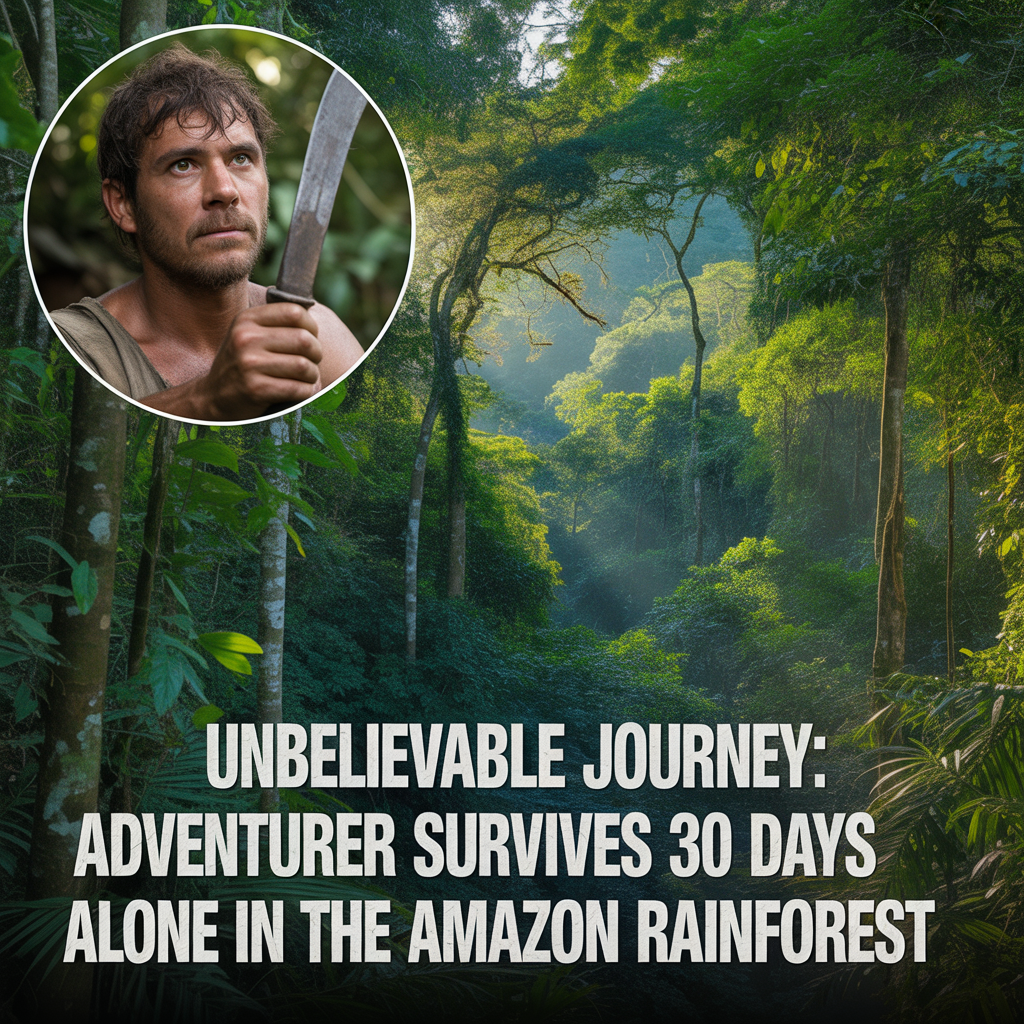

Unbelievable Journey: Adventurer Survives 30 Days Alone in the Amazon Rainforest
Imagine standing at the edge of the world’s largest rainforest, knowing you’re about to spend an entire month alone. Sounds like the start of a wild story, right? That’s exactly what happened to Tom, a modern-day explorer with a knack for finding trouble (and surviving it). Thirty days. Zero backup. Only the Amazon for company. What could possibly go wrong?
Day One: Into the Unknown
Tom’s adventure began with a single step off a rickety canoe and into a sea of green. The rainforest felt alive. Every sound made him jump—birds screeching, monkeys howling, leaves rustling. He quickly realized he wasn’t alone, not by a long shot. Have you ever wondered what it’s like to be watched by a thousand unseen eyes? Tom didn’t have to wonder for long.
His first task was simple: find shelter. Easy, right? Only if you’re not surrounded by trees taller than most buildings and bugs that look like they hit the gym daily. He used fallen branches and giant leaves to build a makeshift hut. It wasn’t fancy, but it kept the rain off, mostly. Mosquitoes, though, weren’t so polite.
The Search for Food: Not Your Typical Grocery Run
Hunting in the Amazon isn’t as simple as grabbing takeout. Tom had to get creative. He fished with a handmade spear. He learned quickly that piranhas aren’t just movie monsters—they’re real, and they have attitude. Did you know they can strip a stick clean in seconds? Tom found out the hard way when he lost his first catch to a hungry swarm.
Foraging was no picnic either. Every berry looked tempting, but some could send you on a trip you’d never want. Tom had to remember what he’d read about edible plants. He stuck with Brazil nuts, wild fruits, and the occasional grub. Yes, grubs. Not exactly a five-star meal, but when your stomach growls louder than a howler monkey, you’ll eat just about anything.
Staying Alive: Water, Weather, and Wildlife
Water was a constant concern. Streams looked clean, but Tom knew the dangers of drinking straight from the source. He boiled everything he drank, using a battered tin cup and a tiny fire. Rainstorms helped too, filling up leaves and hollow logs. It’s amazing how quickly you become an expert at collecting water when your life depends on it.
Then there was the weather. The Amazon doesn’t do “light rain.” It pours, it drenches, it soaks you to the bone. Tom’s shelter took a beating more than once. He had to rebuild it after a night of thunder and falling branches. At least he got a free shower.
Wildlife kept things interesting. Jaguars, snakes, and spiders the size of your hand—oh my! Most creatures kept their distance, but Tom had a few close calls. One night, a curious capybara wandered into his camp. Another time, he woke up to find an army of ants marching through his supplies. Ever tried negotiating with ants? Spoiler: they don’t listen.
Keeping Track of Time and Sanity
Days blended together. With no phone, no clock, and no calendar, Tom relied on the sun and the stars. He scratched a mark on a tree each morning. The first week felt endless. By day ten, he’d already named a couple of trees (Steve and Linda, in case you’re curious).
Loneliness is no joke. The rainforest was never quiet, but Tom missed hearing another human voice. He started talking to birds, and—don’t judge—singing to himself. If you’ve ever been stuck at home during a storm, you know how quickly your mind looks for company. Now imagine that, but with frogs as your backup singers.
Close Calls and Clever Tricks
Being alone in the Amazon means you have to think fast. On day twelve, Tom slipped while crossing a muddy stream and nearly lost his backpack. Inside? His only lighter. He spent hours searching, finding it wedged between two rocks. Have you ever felt that rush of relief when you find your keys? Multiply it by a thousand.
To keep bugs away at night, he burned dry leaves and used mud as a natural repellent. Not the most glamorous look, but it worked. He kept his food tied high in trees, away from curious animals. Did he have a couple of midnight visitors? Absolutely. One night, a possum made off with his last piece of fruit. Tom still holds a grudge.
The Power of Curiosity and Adaptation
Every day brought something new. Tom learned to read animal tracks. He figured out which calls meant “danger” and which just meant “something’s hungry.” He even started to enjoy the challenge. There’s something about facing the unknown head-on that changes you, don’t you think?
He kept a small journal, scribbling notes on leaves and bits of bark. His handwriting got messier, but his spirit stayed strong. He wrote about the colors of the sunrise, the patterns of rain on the river, and the moment he finally caught a fish big enough for two meals. Who knew survival could feel like winning the lottery?
Rescue and Reflection
On the thirtieth day, Tom heard the distant hum of a motorboat. It felt unreal. He waved a bright piece of cloth and shouted until his voice cracked. When the rescue team finally spotted him, he looked like he’d wrestled a mud monster and lost. But he smiled wider than he ever had.
Thirty days alone in the Amazon changed Tom. He lost a bit of weight, gained a few scars, and collected stories he’ll never forget. Would you survive thirty days in the Amazon? Maybe. Would you want to try? That’s another question entirely.
Sometimes, the wildest adventures happen when you least expect them. All it takes is a bit of courage, a splash of luck, and a stubborn streak a mile wide. And maybe, just maybe, a willingness to eat a grub or two.
What Would You Do?
Could you build a shelter from scratch? Would you know which plants to trust? The Amazon isn’t just a place—it’s a test. If Tom can make it, maybe there’s a little explorer in all of us, just waiting for the right challenge. So, are you ready for your own unbelievable journey?
Leave a Reply