

# Ten Powerful Steps to Plan a Perfect Thailand Trip with the Family
 A family discovers the golden splendor of Bangkok’s Wat Phra Kaew on their Thailand adventure.
Table of Contents
- Introduction
- What Is a Thailand Trip with the Family
- Why Thailand Stands Apart from Other Family Destinations
- Why Thailand Is the Ideal Family Destination
- Kid-Friendly Culture and Warm Hospitality
- Diverse Activities for Every Age Group
- Choosing the Right Time for Your Thailand Trip with the Family
- Seasonal Breakdown by Region
- Step-by-Step Guide to Planning Your Thailand Family Trip
- Booking Flights and Accommodation
- Building an Age-Appropriate Itinerary
- Top Destinations for a Thailand Trip with the Family
- Bangkok for Culture and City Adventures
- Chiang Mai for Nature and Ethical Animal Encounters
- Phuket and Krabi for Beaches and Island Life
- Family-Friendly Accommodation in Thailand
- What to Look for in a Family Resort
- Budgeting for Your Thailand Trip with the Family
- Sample Budget Breakdown by Travel Style
- Common Mistakes to Avoid on a Thailand Trip with the Family
- Cultural Missteps That Can Cause Offense
- Health, Safety, and Cultural Tips for Families
- Vaccinations and Food Safety
- Road Safety and Getting Around
- FAQ
- Conclusion
Introduction
Thailand welcomed over 34 million international visitors in 2024, and families represent one of the fastest-growing segments of that number—for very good reason. A Thailand trip with the family can feel daunting at first glance: unfamiliar language, tropical heat, long-haul flights, and children with varying interests all create real logistical challenges. Yet once families land, the “Land of Smiles” consistently delivers memories that outlast any obstacle.
From the glittering temples of Bangkok to the powder-white beaches of Phuket and the jungle-draped mountains of Chiang Mai, Thailand offers a rare combination of cultural richness, natural beauty, and genuine child-friendly hospitality that few destinations can rival. Thai locals famously adore children, and the country’s infrastructure—family resorts with dedicated kids’ clubs, well-connected domestic transport, and an abundance of affordable dining—makes navigating with children far easier than most parents expect.
This guide walks you through every stage of planning a Thailand trip with the family: from choosing the right season and destinations to avoiding costly mistakes and keeping everyone healthy. Whether you’re traveling with toddlers, tweens, or teenagers, these ten steps will help you craft an itinerary that keeps kids engaged and parents genuinely relaxed.
Ready to skip ahead? Explore our complete destination breakdown or go straight to the step-by-step planning guide.
What Is a Thailand Trip with the Family
A Thailand trip with the family is a multi-destination vacation centered on Southeast Asia’s most visited nation, combining cultural immersion, natural exploration, and beach relaxation in a single itinerary tailored to the needs of parents and children alike. Thailand’s geographic diversity—urban Bangkok, mountainous Chiang Mai, tropical islands, and ancient historical parks—means a well-planned family holiday can offer something genuinely distinct for every age group, from toddlers discovering colorful temples to teenagers seeking adventure sports and ethical wildlife encounters.
Thailand is not simply a beach destination bolted onto a city break. It is a country where children can feed rescued elephants at an ethical sanctuary in the morning, cook authentic pad thai in a village kitchen in the afternoon, and fall asleep to the sounds of a night market just outside their hotel window. The country’s scale—slightly smaller than the state of Texas—makes it logistically manageable while still feeling endlessly varied.
Why Thailand Stands Apart from Other Family Destinations
Thailand scores exceptionally high on the four dimensions that matter most to traveling families:
- Safety: Thailand has a low rate of violent crime, and the standard of healthcare in larger cities is [among the highest in Southeast Asia](https://travelynnfamily.com/thailand-with-kids-travel-guide/). Families are highly unlikely to encounter violent crime, and international-standard hospitals are readily accessible in Bangkok, Chiang Mai, and Phuket.
- Affordability: A family of four can enjoy a comfortable 10–15-day trip for between [$2,500 and $5,000](https://hanoivoyage.com/en/blog/budget/thailand-family-vacation-budget), making it exceptional value compared with European or North American alternatives.
- Child-friendly culture: Thai people genuinely love children. Locals in markets, restaurants, and temples consistently make a fuss of young visitors in a way that is both warm and disarming.
- Infrastructure: Family resorts with dedicated kids’ clubs, children’s pools, and family menus are found coast to coast, from Bangkok’s riverside hotels to Phuket’s beachfront mega-resorts.
Understanding these foundations makes planning a Thailand trip with the family far more manageable. The key is aligning your itinerary, budget, and accommodation with your children’s ages and interests—and this guide shows you exactly how.
Why Thailand Is the Ideal Family Destination
 Four compelling reasons why Thailand consistently ranks as a top-tier destination for family vacations worldwide.
Kid-Friendly Culture and Warm Hospitality
Thailand is a complex and alluring country packed with fascinating culture, warm people, white sandy beaches, and legendary landscapes. Families arriving with young children will immediately notice how Thai locals interact with them—a gentleness and genuine delight that is unusual in heavily-touristed destinations.
Thai culture provides natural educational moments for children without requiring a classroom. Buddhist ceremonies, flower markets, floating markets, and traditional cooking classes all offer hands-on learning that engages curious minds far better than any guidebook. Visiting iconic temples like Wat Pho in Bangkok, famous for its enormous reclining Buddha, or Wat Phra That Doi Suthep perched above Chiang Mai introduces children to Buddhist customs in a tangible, visual way. The colorful architecture, the smell of incense, and the quiet reverence of monks in saffron robes create moments that children remember for years.
Beyond temples, Thai street life itself is a sensory education. Letting children choose their own snacks from a night market stall, watching a street vendor prepare mango sticky rice, or learning to say “sawasdee” and “khop khun” to shopkeepers builds cultural confidence and genuine curiosity about the wider world.
Diverse Activities for Every Age Group
One of Thailand’s greatest strengths as a family destination is its range of age-appropriate activities. The table below compares experiences by age group to help you match the itinerary to your children:
A Thailand trip with the family can be adapted to match any combination of ages and energy levels. The country’s regional diversity means that no two days need to feel alike, and the pace can be adjusted from leisurely beach mornings to full-day cultural expeditions depending on how your family travels.
Want to implement this? Download our free destination planning checklist or continue reading for our step-by-step planning guide.
Choosing the Right Time for Your Thailand Trip with the Family
Timing is one of the most important decisions you’ll make when organizing a Thailand trip with the family. Thailand’s tropical climate divides into three broad seasons—cool dry, hot dry, and rainy—and the experience varies considerably by region and month.
The best time to visit Thailand with a family is from November to early March. During this dry season, temperatures are cooler and more manageable for children, skies are reliably clear, and outdoor activities run without disruption from monsoon rains. This mild climate is especially beneficial for young children and elderly family members traveling on multigenerational trips.
Seasonal Breakdown by Region
Critically, Thailand’s two coastlines experience rain at different times of year, so the optimal travel window depends on your chosen destinations:
Peak season (December–February) coincides with the highest prices and sold-out resorts, particularly during Christmas and New Year. If your school calendar allows, traveling in November or early March offers the same excellent weather with thinner crowds and significantly better rates. The Tourism Authority of Thailand publishes up-to-date festival calendars—consider aligning your trip with Loy Krathong (the floating lantern festival, held in November) or the Songkran water festival (Thai New Year, April), both of which create unforgettable family memories.
For families on tighter budgets, the shoulder seasons (March–May and September–October) offer discounts of up to 40% on accommodation while still delivering manageable travel conditions, particularly in northern regions like Chiang Mai and Chiang Rai where rainfall is lighter.
Step-by-Step Guide to Planning Your Thailand Family Trip
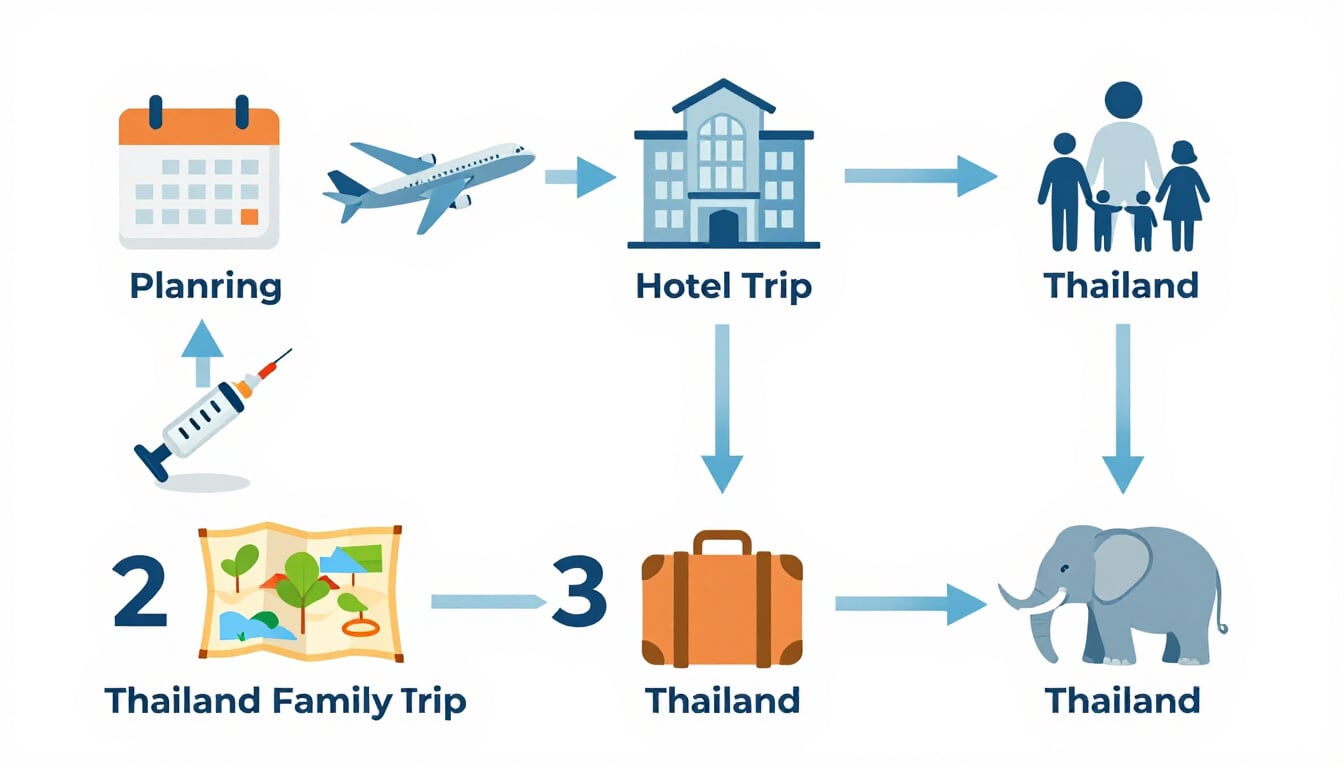 Eight sequential planning steps every family should complete before departing for Thailand.
A well-organized Thailand trip with the family doesn’t happen by accident. Follow these eight steps to build a smooth, memorable journey.
- Decide on trip duration and regions. The ideal length for a family holiday in Thailand is [10 days](https://www.odynovotours.com/thailand/how-to-plan-a-family-vacation.html), which allows comfortable exploration of Bangkok, one northern or cultural destination, and a beach region. Two weeks lets you slow down significantly and is strongly preferable if your children are young.
- Choose your travel season. Use the seasonal table above to align your dates with the best weather for your chosen destinations. Traveling outside peak holiday periods (particularly avoiding Christmas week) reduces costs and crowds substantially.
- Book international flights and airport transfers early. Use tools like [Google Flights](https://flights.google.com) to compare prices across the full month. Book mid-week departures (Tuesday–Thursday) for consistently lower fares, and pre-book private airport transfers—a minibus accommodates the whole family plus luggage comfortably.
- Reserve family-specific accommodation. Look for resorts with dedicated kids’ clubs, shallow children’s pools, family rooms or connecting suites, and on-site dining with children’s menus. For high season (December–February), book resorts in Phuket and Koh Samui at least three to four months in advance.
- Arrange health preparations. Visit a travel medicine clinic at least six to eight weeks before departure. Key recommended vaccines include Hepatitis A and Typhoid. Ensure all routine vaccinations are current for every family member, and check the [CDC Thailand traveler health guidelines](https://wwwnc.cdc.gov/travel/destinations/traveler/none/thailand) for the latest recommendations.
- Purchase comprehensive travel insurance. Skipping insurance is one of the most dangerous mistakes families make. Thailand’s private hospitals deliver excellent care but are expensive without coverage. Ensure your policy covers medical emergencies, trip cancellations, and activities such as water sports.
- Plan an age-appropriate activity mix. Build your itinerary around three to five anchor activities per destination—temple visits, ethical elephant encounters, cooking classes, island tours—and leave flex days for beach time and rest. Resist the temptation to over-schedule; exhausted children make for exhausted parents.
- Pack smart for the tropical climate. Light, breathable clothing, SPF 50+ sunscreen, DEET-based insect repellent, reusable filtered water bottles, and a basic first-aid kit are essentials. Most western toiletries are available at 7-Eleven stores and pharmacies throughout Thailand, so there’s no need to overpack.
Booking Flights and Accommodation
International flights represent the largest single expense on any Thailand trip with the family. Booking return flights as early as possible is strongly advised, particularly for school-holiday departures. Use fare comparison tools and set price alerts to catch sales.
Once in-country, domestic travel is affordable and efficient. Low-cost carriers like AirAsia and Nok Air connect Bangkok with Chiang Mai, Phuket, and Koh Samui for as little as $30–$60 per person one-way when booked in advance. For families seeking an authentic adventure, the overnight sleeper train between Bangkok and Chiang Mai is an experience in itself—second-class bunk-bed carriages are safe, comfortable, and genuinely memorable for children.
Building an Age-Appropriate Itinerary
A classic two-week Thailand trip with the family typically follows this structure: two to three days in Bangkok, a cultural stop in Chiang Mai or the ancient city of Ayutthaya, followed by four to five days at a beach destination. This combination satisfies every family member—city curiosity for older children, cultural depth for parents, and beach relaxation for everyone. Keep daily schedules loose enough to accommodate naps for younger children and spontaneous detours for teenagers.
Want to implement this? Download our free family itinerary template or continue reading to discover the best destinations for your family.
Top Destinations for a Thailand Trip with the Family
Thailand’s regions each offer something distinct, and understanding which destinations suit your family’s age profile and interests will dramatically shape your experience. Here are the four regions that consistently deliver the best results for families.
Bangkok for Culture and City Adventures
Bangkok is almost always the entry point for a Thailand trip with the family, and it earns its place as a destination in its own right. Two or three days is a good length of time to spend in Bangkok with kids, giving your family enough time to explore the main highlights while acclimatizing to the tropical heat.
Top family activities in Bangkok include:
- Visiting the Grand Palace and Wat Phra Kaew (the revered Temple of the Emerald Buddha)
- Taking a river taxi along the Chao Phraya to Wat Arun and the vibrant Chinatown district
- Exploring the Chatuchak Weekend Market for souvenirs, snacks, and cultural color
- Letting younger children burn energy at KidZania Bangkok or the Children’s Discovery Museum
- A longtail boat ride through the khlongs (canals) of Thonburi, Bangkok’s quieter west bank
The BTS Skytrain and MRT Subway make Bangkok surprisingly easy to navigate with children, and the Grab ride-hailing app offers transparent pricing that eliminates taxi-fare negotiations. Bangkok is best suited to children aged six and above who can engage meaningfully with an urban, culturally rich environment.
Chiang Mai for Nature and Ethical Animal Encounters
Chiang Mai is the adventure capital of northern Thailand and one of the most rewarding highlights of any Thailand trip with the family. Set in a mountain valley surrounded by forested hills, it offers a cooler climate than the south and a distinctly different cultural atmosphere from Bangkok’s urban buzz.
The most sought-after family experience in Chiang Mai is visiting an ethical elephant sanctuary. Elephant Nature Park offers families the chance to observe rescued elephants behaving naturally, without riding, tricks, or performing—a powerful educational experience that resonates deeply with children. Beyond elephants, Chiang Mai delivers hands-on Thai cooking classes, temple cycling tours through the historic moated city, beginner-friendly Muay Thai sessions for older children, and accessible day hikes to jungle waterfalls.
For multi-generational families, Chiang Mai’s manageable scale, excellent restaurants, and cooler temperatures make it the most comfortable base in Thailand. Spending three to four nights here strikes the right balance between depth and pace.
Phuket and Krabi for Beaches and Island Life
No Thailand trip with the family is genuinely complete without time on the beaches. Phuket is Thailand’s most developed island and offers the widest selection of family-friendly resorts, water parks, and organized activities. For families, Kamala Beach, Kata Beach, and Bang Tao Beach are the most family-appropriate stretches of sand on the island, with calmer waters and less nightlife than the busier Patong Beach.
Krabi, reachable by a two-hour drive or short flight south of Phuket, offers a dramatically different landscape: towering limestone karsts rising from emerald lagoons, long-tail boat routes to deserted beaches, and some of Thailand’s best snorkeling just off the shore. Ao Nang Beach serves as the most accessible family base, with easy access to the Four Islands tour and the iconic Railay Beach, reachable only by boat.
Family-Friendly Accommodation in Thailand
 Thailand’s top family resorts deliver world-class pools, supervised kids’ clubs, and direct beachfront access.
What to Look for in a Family Resort
Selecting the right accommodation is as important as choosing the right destination on any Thailand trip with the family. Thailand has a well-earned reputation as one of the easiest countries in Asia to travel with children, and resorts across Phuket, Krabi, Koh Samui, and Khao Lak have been refining the family holiday offer for decades.
The best family resorts in Thailand share these defining features:
- Dedicated kids’ clubs with drop-off supervision for specified age groups (verify policies carefully—some clubs require parental presence)
- Shallow children’s pools separate from the adult main pool, with water features and slides
- Family rooms, suites, or connecting rooms with adequate space to avoid the claustrophobia of cramped standard rooms
- Children’s menus at on-site restaurants, with options for picky eaters alongside local Thai dishes
- Beach or pool proximity that reduces daily logistical friction—particularly important with toddlers and young children
Here are some of the most consistently praised family properties by location:
- Phuket: Centara Grand Beach Resort Karon Beach (water park, lazy river, four outdoor pools), JW Marriott on Mai Khao Beach (ranked among Asia’s top resorts, dedicated Tin Box Kids’ Club), Pamookkoo Resort near Kata Beach (iconic four-story waterslide)
- Koh Samui: Four Seasons Koh Samui (complimentary “Kids for All Seasons” daily supervised program), Meliá Koh Samui (turquoise beachfront setting, structured kids’ activities)
- Bangkok: Anantara Riverside Bangkok Resort (river shuttle boat, Chang Noi Kids’ Club, 11 acres of riverside gardens)
- Chiang Mai: Shangri-La Chiang Mai (play tents on request, children’s activity programs), Meliá Chiang Mai (rooftop pool, eco-farming program for kids)
For mid-range families, apartment-style hotels on platforms like Booking.com or Agoda provide spacious family rooms at a fraction of resort prices. Prioritize location over luxury—a well-placed guesthouse near the BTS in Bangkok saves enormous amounts of time and money compared with a budget property requiring expensive taxis to every attraction.
Budgeting for Your Thailand Trip with the Family
One of the most appealing aspects of a Thailand trip with the family is its remarkable affordability. A family of four can complete a comfortable three-week trip for approximately 94,573 THB (roughly $2,600 USD), including accommodation, food, transport, and activities. For families accustomed to European or North American holiday costs, this level of value is genuinely striking.
Sample Budget Breakdown by Travel Style
For a 10–15-day trip, families can expect to spend between $2,500 and $5,000 for a well-rounded, comfortable experience. Budget-conscious families may spend around $2,500–$3,000, staying in affordable guesthouses, using local transport, and enjoying street food regularly. Mid-range families typically budget $3,000–$4,500, covering boutique accommodation, a mix of dining options, and organized tours.
Key money-saving strategies for a Thailand family vacation:
- Book flights at least three months in advance and use Google Flights’ calendar view to identify the cheapest departure dates
- Travel in shoulder season (November or early March) for 20–30% lower accommodation costs with equivalent weather
- Eat at local markets and food courts—pad thai, fried rice, and mango sticky rice cost just 40–80 THB (approximately $1–$2) per dish at market stalls
- Combine free and paid sights per day rather than filling every hour with ticketed attractions
- Buy a local SIM card at Suvarnabhumi Airport for $10–$15 to avoid roaming charges and use Grab for all city transport
Ethical elephant sanctuary visits ($45–$90 per person) and Thai cooking classes ($25–$45 per person) are the two paid experiences most families prioritize. Budget for these specifically rather than treating them as optional line items.
Want to implement this? Download our free Thailand family budget calculator or read on to learn the common mistakes that drain family travel budgets.
Common Mistakes to Avoid on a Thailand Trip with the Family
 Avoiding these six common pitfalls protects your family’s budget, health, and cultural experience in Thailand.
Even well-traveled families make avoidable errors on a Thailand trip with the family. Here are the most significant mistakes to sidestep—and how to avoid each one.
Cultural Missteps That Can Cause Offense
Disrespecting temples and Buddhist customs. Temples are active religious spaces, not tourist photo backdrops. Entering without covering shoulders and knees, keeping shoes on inside sacred buildings, or posing irreverently near Buddha statues causes genuine offense to Thai people. Pack a lightweight scarf or sarong—it solves most dress code situations instantly and costs almost nothing. [Thailand has some of the strictest lèse-majesté laws in the world](https://www.roughguides.com/thailand/travel-tips/), with penalties of up to 15 years in prison for insulting the royal family—including online posts and social media. Teach older children about this before departure, and lead by example.
Losing your temper in public. Thai culture is built on the concept of jai yen (“cool heart”) and avoids public confrontation. Shouting or showing visible frustration—even when something goes wrong—embarrasses everyone and resolves nothing faster. Patience and a smile will always get you further in Thailand than raised voices.
Choosing unethical animal experiences. Elephant riding, tiger petting, and monkey shows remain widespread but are forms of animal exploitation. Choose sanctuaries that prohibit rides and performances, and prioritize organizations focused on conservation and rescue, such as [Elephant Nature Park](https://www.elephantnaturepark.org/) in Chiang Mai.
Over-scheduling the itinerary. [Trying to visit every destination leads to exhaustion](https://backroadplanet.com/9-mistakes-travelers-should-avoid-in-thailand/), particularly with young children. Bangkok, Chiang Mai, and two beach destinations in one week is simply too much. Prioritize depth over breadth—three well-paced destinations are far more memorable than six rushed ones.
Skipping travel insurance. Medical care in Thailand’s private hospitals is excellent but expensive without coverage. A comprehensive family travel insurance policy covering medical emergencies, cancellations, and water sports is not optional—it’s essential.
Not using Grab for transport. Taxis at tourist hotspots frequently refuse the meter and quote fares two to three times the metered amount. Using [Grab](https://www.grab.com/th/) gives you pre-agreed, transparent pricing and eliminates the daily negotiation friction that drains energy on family trips.
Health, Safety, and Cultural Tips for Families
Keeping the whole family healthy is a prerequisite for enjoying any Thailand trip with the family. Fortunately, Thailand’s health risks are well-understood and largely preventable with the right preparation.
Vaccinations and Food Safety
Visit a travel medicine clinic at least six to eight weeks before departure. As of 2026, no mandatory vaccinations are required for most travelers entering Thailand, but several are strongly recommended for family travel:
- Hepatitis A — The most commonly recommended add-on vaccine for Thailand; transmitted via contaminated food and water
- Typhoid — Recommended for families planning to eat at local markets and street food stalls
- Routine vaccines (MMR, DTP, polio) — Ensure all family members are up to date; measles cases have been rising internationally
- Hepatitis B — Recommended for longer stays or families with potential for medical exposure
- Rabies pre-exposure — Worth discussing if your itinerary includes areas with stray dogs or monkeys, such as temple complexes or jungle regions
Thailand’s street food is convenient, delicious, and generally safe when following simple rules: choose stalls with high turnover and freshly cooked food served hot, avoid raw garnishes at basic eateries, peel your own fruit, and never drink tap water. Pack oral rehydration sachets—dehydration from stomach upsets escalates quickly in young children in hot climates.
Dengue fever, transmitted by mosquitoes, is a moderate year-round risk that peaks in the rainy season. Apply DEET-based insect repellent consistently, dress children in long sleeves during evening hours, and request mosquito nets if staying in rural areas or budget guesthouses.
Road Safety and Getting Around
Road safety is one of the most significant and underestimated risks for families in Thailand. Road death rates are high, and motorbike accidents are among the most common causes of tourist injury. Do not put children on the back of rental scooters. If hiring a car, choose a newer vehicle with airbags and confirm that proper seatbelts are fitted—bring portable child car seats from home, as they are rarely provided by Thai rental companies.
The CDC advises choosing larger vehicles for family road travel and avoiding driving after dark, particularly on rural roads where street lighting is limited. In cities, the BTS Skytrain and MRT Subway are safe, air-conditioned, and straightforward to use with children. Tuk-tuks are fun for short novelty rides but always agree on a price before boarding. Between cities, domestic flights or the overnight sleeper train remain the most practical and comfortable family options.
FAQ
 Answers to the most frequently asked questions about planning a Thailand family vacation.
What is a Thailand trip with the family actually like for first-time visitors?
A Thailand trip with the family for first-time visitors is typically characterized by sensory richness, genuine logistical ease, and warmth from locals that surprises most Western families. Thailand’s well-developed tourism infrastructure means English-language signs and menus are common in tourist areas, family-friendly accommodation is widely available at all price points, and domestic transport connections are reliable. Most families describe their first Thailand visit as considerably easier than anticipated—and many return within two years. The country rewards families who arrive prepared with an open mind and realistic pace expectations.
Bangkok or Phuket: which is better for a family trip to Thailand?
The choice between Bangkok and Phuket depends on your family’s priorities and children’s ages. Bangkok excels for cultural immersion, temple exploration, and city adventure—best for children aged six and above who can engage with an urban environment’s pace and sensory intensity. Phuket delivers beach relaxation, water parks, resort amenities, and island excursions suited to all ages from toddlers upward. Most families benefit from visiting both: two to three days in Bangkok followed by a flight south to a beach destination creates an itinerary that satisfies every family member and showcases Thailand’s full range.
How do I plan a Thailand trip with the family from scratch?
To plan a Thailand trip with the family from scratch, start by choosing your travel season (November–February is optimal for most regions) and selecting two to three destinations based on your children’s ages and interests. Book international flights as early as possible to secure the best fares, then reserve accommodation at family-friendly resorts with confirmed kids’ club availability. Arrange health preparations—vaccinations and travel insurance—at least six to eight weeks before departure. Build your day-by-day itinerary around three to five anchor activities per destination, leaving regular flex days for beach time and rest, and you’ll have a well-structured trip that doesn’t exhaust anyone.
How much does a Thailand trip with the family actually cost?
For a 10–15-day trip, families can expect to spend between $2,500 and $5,000 for a comfortable, well-rounded experience, excluding international flights. Budget families spending $2,500–$3,000 can stay in guesthouses, use local transport including Grab and buses, and eat primarily at street food stalls and markets. Mid-range families typically budget $3,000–$4,500, covering boutique hotels, a mix of Thai and Western meals, domestic flights, and organized excursions. International airfares are the single largest variable cost and should be booked three to six months in advance for the best family pricing.
What are the most common mistakes families make on a Thailand trip?
The most common family travel mistakes in Thailand include over-scheduling the itinerary (leading to exhausted children), choosing unethical animal experiences (always verify no elephant riding or performing), skipping travel insurance, failing to dress modestly for temple visits, and overpaying for taxis by not using the Grab app or insisting on the meter. Drinking tap water is another frequent error—stick to bottled or filtered water throughout your trip, including for brushing teeth. Disrespecting the Thai royal family, even jokingly, carries serious legal consequences and should be treated with complete seriousness.
What health preparations do families genuinely need before visiting Thailand?
Beyond purchasing travel insurance, families should visit a travel medicine clinic six to eight weeks before departure. Hepatitis A vaccination is the most commonly recommended add-on for Thailand; Typhoid is also advisable for families eating at markets and local restaurants. All family members should be current on routine vaccines including MMR. Pack DEET insect repellent, SPF 50+ sunscreen, oral rehydration salts, antihistamines, and a basic first-aid kit. For families visiting jungle areas, rural border regions, or destinations with high stray animal contact, discuss rabies pre-exposure vaccination and malaria prophylaxis with a travel medicine specialist before finalizing your itinerary.
Conclusion
A Thailand trip with the family stands out as one of the most rewarding journeys a family can take together. The country delivers on every dimension that families need: locals who genuinely love children, safe and well-developed tourism infrastructure, an extraordinary range of age-appropriate activities from ethical elephant encounters to temple explorations and island snorkeling, and a price point that makes extended, high-quality travel genuinely accessible.
The three most important takeaways from this guide are: choose the right season (November to February for most destinations, with the Gulf Coast offering alternatives from March onward), plan methodically (book flights and resorts early, arrange vaccinations and insurance well in advance, and use Grab for transport), and balance the itinerary (mix cultural highlights with beach time and rest days rather than cramming every city into a single trip). Families who follow these principles consistently report smoother, far more memorable experiences.
Thailand rewards the prepared traveler. Those who arrive knowing which elephant sanctuaries operate ethically, which beaches suit their children’s ages, how to dress for temple visits, and how to navigate the transport system enjoy a profoundly richer trip than those who arrive unprepared. The investment in research pays dividends that continue long after the journey home.
Your actionable next step today: open Google Flights and search for flights to Bangkok in the November–February window. Compare prices across the full month, set a price alert for your preferred travel dates, and secure your flights before school-holiday surcharges apply. Your family’s Thailand adventure starts with that one booking.
 The perfect close to every Thailand family trip—sunset walks, warm sand, and memories that last a lifetime.
Leave a Reply