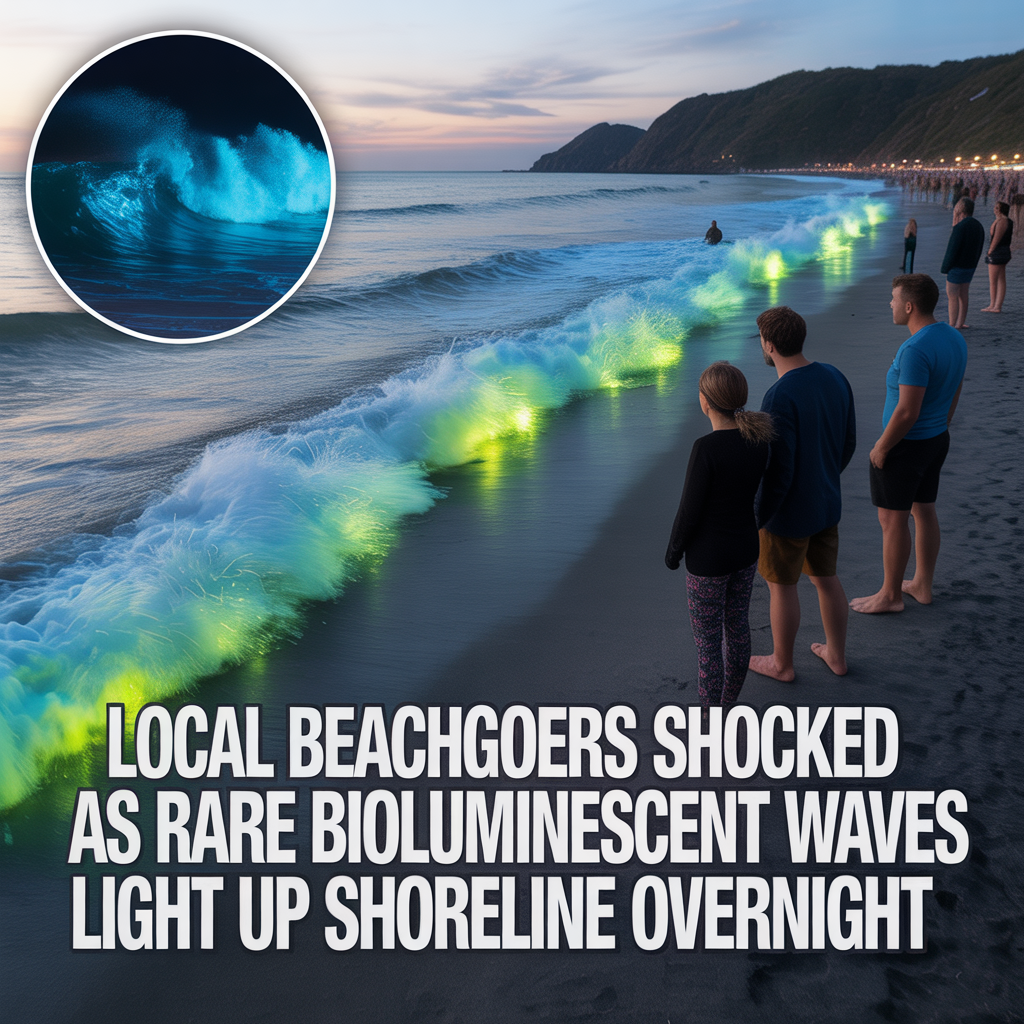

Local Beachgoers Shocked as Rare Bioluminescent Waves Light Up Shoreline Overnight
Have you ever been out for a peaceful evening walk on the beach and suddenly felt like you’d stepped straight into a science fiction movie? That’s exactly what happened last night to dozens of local beachgoers who thought they were seeing things—until they realized the entire shoreline was glowing bright blue. No, it wasn’t a prank or some new party trick. It was a rare display of bioluminescent waves, and it had everyone buzzing with excitement (and a few head scratches, too).
What Are Bioluminescent Waves?
Let’s clear something up first. Bioluminescence sounds fancy, but it’s just nature’s way of putting on a light show. Some sea creatures—like certain plankton, jellyfish, and even a few types of tiny shrimp—produce light when they’re disturbed. When enough of them gather in the water and the waves stir things up, the whole ocean surface can start to shimmer and glow. It’s like the sea decided it was time to compete with the stars.
Last night, the conditions must have been perfect. The water was just the right temperature, and the tide was coming in strong. That meant every wave rolling onto the sand was lit up in electric blue. If you’re wondering if it looks as cool in person as it does in the photos—yes, it really does. Some folks were so stunned, they just stood there with their mouths open, phones forgotten in their pockets.
Why Is This So Unusual?
Most people spend their whole lives without seeing anything like this. Sure, you might have heard about glowing waves happening in tropical places, but right here at our own local beach? That’s almost unheard of. Some long-time residents said they hadn’t seen anything like it in decades. One woman at the pier said, “I thought my eyes were playing tricks on me. Turns out, Mother Nature was just showing off.”
So, what made last night so special? It’s likely a mix of recent warm weather, calm seas earlier in the week, and a little luck. The tiny plankton responsible—usually a type called Noctiluca scintillans—thrive when the water is just right. When the waves crash, they get jostled, and that’s when they light up. It’s a defense mechanism, sort of like a sea creature’s way of saying, “Back off, I’m busy glowing here!”
How Did People React?
If you can imagine a crowd of people quietly enjoying a summer evening, and then picture the same group suddenly gasping and running closer to the water, you’ve got the scene. Some people squealed. Kids were racing up and down the sand, trying to outrun the glowing water. A few brave souls even waded in, kicking their feet to make their own sparkles. (Just a reminder: check local safety guidelines before jumping into glowing waves—bioluminescence is amazing, but jellyfish stings are not.)
There were people taking selfies, some trying to capture videos, and at least one amateur photographer lugging a tripod across the dunes. If you’re wondering whether anyone actually managed to get that perfect shot—well, let’s just say phone cameras and midnight glowing waves don’t always mix. But nobody seemed to mind. It was all about being there, in that moment, watching nature do something totally unexpected.
Is It Dangerous?
That’s usually the next question. Bright blue water can look a little suspicious, right? Luckily, most bioluminescent events are harmless. The glowing plankton don’t sting, and they’re not toxic. Still, if you’re sensitive to seawater or have a habit of swallowing waves, you might want to stick to watching from the sand. (And if you see someone bottling it up to take home—maybe tell them it’s best left in the ocean!)
When Can You See It?
The million-dollar question: will it happen again tonight? Unfortunately, bioluminescent waves are unpredictable. They can appear for a single night or stick around for days if the conditions hold. If you’re feeling lucky, head down to the beach after sunset. The best time is usually when it’s darkest, so leave the flashlight at home and let your eyes adjust. Who knows? You might catch a repeat performance.
If you do go, try walking along the shoreline and drag your feet through the water. Sometimes, even a gentle touch is enough to set off the glow. And don’t forget to look back at your footprints—they just might light up behind you. How often do you get the chance to walk on a beach that sparkles?
What Should You Bring?
Planning to check it out? You don’t need much. Comfortable shoes, a light jacket for the breeze, and maybe a camera if you’re feeling ambitious. Don’t expect your phone to capture the glow perfectly—it’s one of those things that’s better in person. If you want to try a photo, use the night mode and hold very still. Or just enjoy the view and let your friends think you’ve discovered magic.
Bringing kids? Tell them what to expect, and watch their faces when the water glows at their touch. There’s something about seeing a child’s eyes widen that makes the whole night even more special. And if you’re coming with friends, maybe bring a thermos of hot chocolate or tea. The beach at night is cooler than you think, even in summer.
Why Does This Matter?
It’s not every day you get to see the ocean light up. These rare moments remind us that nature can still surprise us, no matter how well we think we know our own backyard. If you’re the type who usually skips the beach at night, maybe this is your sign to try something different. The next time someone asks, “Anything interesting happen around here lately?” you’ll have quite the story to tell.
Ever witnessed something like this before? Or maybe you’re planning to head down to the shoreline tonight, just in case the magic repeats itself. Either way, keep your eyes open. The ocean has a few tricks left up its sleeve.
Leave a Reply